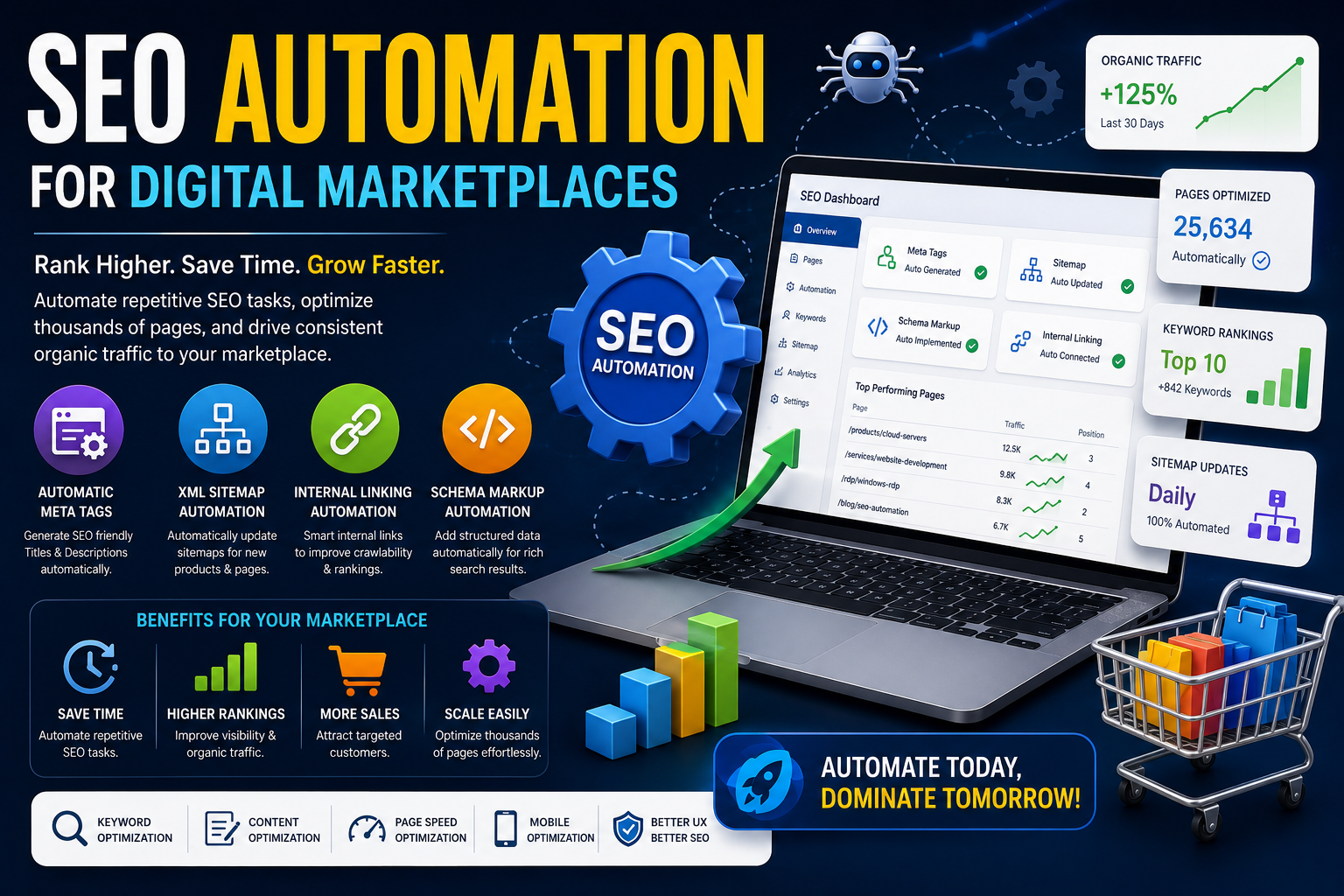
Search Engine Optimization (SEO) is one of the most effective ways to attract customers to a digital marketplace. However, manually managing SEO for hundreds or even thousands of products, services, and blog posts can quickly become overwhelming.
SEO automation helps streamline repetitive tasks while maintaining consistency across your website. From automatically generating meta tags to creating XML sitemaps and optimizing internal links, automation allows marketplace owners to focus on growing their business instead of spending hours on manual optimization.
This guide explains how SEO automation works and how it can improve the visibility of your digital marketplace.
What is SEO Automation?
SEO automation is the process of using software, scripts, or built in website features to perform SEO related tasks automatically.
Instead of editing every page manually, your website can automatically generate SEO elements such as:
- Meta Titles
- Meta Descriptions
- URL Slugs
- Canonical URLs
- XML Sitemaps
- Open Graph Tags
- Structured Data
- Internal Links
Automation saves time while ensuring consistency throughout the website.
Why Digital Marketplaces Need SEO Automation
Unlike small websites, digital marketplaces constantly grow.
You may have:
- Hundreds of products
- Multiple service categories
- Blog articles
- Customer reviews
- Landing pages
Managing SEO manually becomes difficult as your content expands.
Automation helps maintain quality while reducing workload.
Benefits of SEO Automation
Save Time
Instead of writing repetitive SEO information for every page, templates can generate optimized metadata automatically.
Improve Consistency
Automation ensures every page follows the same SEO structure, reducing missing titles, duplicate descriptions, and broken links.
Better Search Visibility
Well optimized pages have a greater chance of appearing in search results, helping potential customers discover your products and services.
Reduce Human Errors
Automated systems help avoid common mistakes such as:
- Missing meta titles
- Empty descriptions
- Duplicate URLs
- Incorrect canonical tags
Scale Easily
Whether your marketplace has 50 products or 50,000, SEO automation allows your optimization strategy to grow alongside your business.
Essential SEO Automation Features
Automatic Meta Titles
Generate titles using predefined templates.
Example:
Product Name | AonAB StoreAutomatic Meta Descriptions
Create descriptive summaries based on product or service information.
SEO Friendly URLs
Automatically generate clean URLs.
Example:
https://aonabstore.com/products/custom-website-developmentinstead of
https://aonabstore.com/product?id=123XML Sitemap Generation
Automatically update your sitemap whenever:
- A new product is added
- A service is published
- A blog article goes live
This helps search engines discover new pages more efficiently.
Image Optimization
Automatically:
- Compress images
- Generate descriptive ALT text
- Create responsive image sizes
- Use lazy loading
Optimized images improve both SEO and page speed.
Internal Linking
Automatically recommend related:
- Products
- Services
- Blog Articles
- Categories
Strong internal linking helps users navigate your website and improves crawlability.
Structured Data
Implement structured data such as:
- Product Schema
- Service Schema
- Article Schema
- FAQ Schema
- Breadcrumb Schema
- Organization Schema
Structured data can improve how your pages appear in search results.
SEO for Product Pages
Every product should include:
- Unique Title
- Meta Description
- Product Description
- Features
- High Quality Images
- FAQ Section
- Customer Reviews
- Related Products
SEO for Service Pages
Service pages should contain:
- Detailed Overview
- Benefits
- Features
- Pricing Information
- Frequently Asked Questions
- Contact Information
- Related Services
SEO for Blog Posts
Every article should include:
- SEO Title
- Meta Description
- Focus Keyword
- Headings
- Internal Links
- External References (where appropriate)
- Images with ALT text
- FAQ Section
Improve Website Speed
Search engines favor websites that load quickly.
Recommended optimizations:
- Image Compression
- Browser Caching
- Lazy Loading
- Minified CSS & JavaScript
- CDN Integration
- Optimized Database Queries
Mobile Optimization
Most visitors browse using mobile devices.
Your marketplace should be:
- Fully Responsive
- Mobile Friendly
- Fast Loading
- Easy to Navigate
- Touch Optimized
Common SEO Mistakes
Avoid:
- Duplicate Content
- Thin Content
- Missing ALT Text
- Broken Links
- Slow Loading Pages
- Keyword Stuffing
- Missing Structured Data
Recommended SEO Tools
Helpful tools include:
- Google Search Console
- Google Analytics
- Google PageSpeed Insights
- Google Rich Results Test
- Bing Webmaster Tools
These tools can help you monitor performance and identify opportunities for improvement.
Future of SEO Automation
Artificial intelligence is making SEO automation smarter.
Modern systems can assist with:
- Content suggestions
- Keyword research
- Internal linking recommendations
- Metadata generation
- Performance analysis
Automation supports your workflow, but high quality, original content remains essential for long term success.
Best Practices
Follow these recommendations:
✔ Write original content
✔ Use descriptive headings
✔ Optimize images
✔ Update content regularly
✔ Monitor website performance
✔ Improve user experience
✔ Keep navigation simple
✔ Maintain clean URL structures
✔ Add structured data
✔ Review SEO performance regularly
Conclusion
SEO automation allows digital marketplaces to optimize hundreds of pages efficiently while maintaining consistency and reducing repetitive work. By combining automation with valuable content, a fast website, and a great user experience, you can improve your visibility in search engines and make it easier for customers to discover your products and services.
Remember, automation should support your SEO strategy, not replace thoughtful content creation. The best results come from combining automated processes with accurate information and a user focused approach.